Hardwood Floor Cupping & Water Buckling Repair Cost Estimator
Has an appliance leak, plumbing overflow, or high crawlspace humidity caused your hardwood boards to curl at the edges or buckle off the subfloor? Calculate the exact cost for commercial drying, precision sanding, and board weaving.
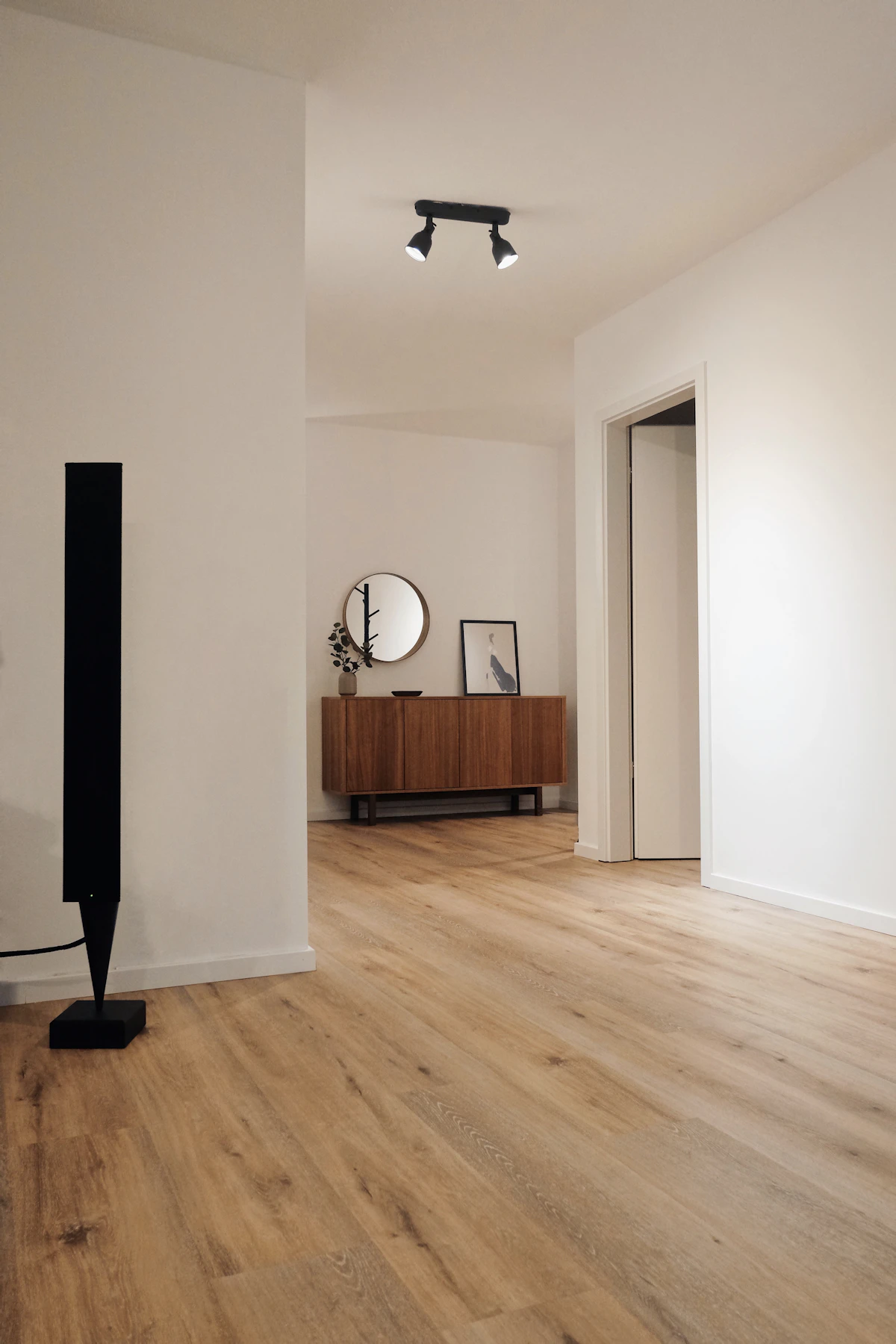
Targeted moisture drying and precision board weaving restores authentic hardwood without costly insurance tear-outs.
Average Hardwood Cupping Repair Cost
$4.00 – $14.00 per sq. ft. ($800 – $3,500 avg project)
Mild humidity cupping resolved with commercial dehumidification and air injection averages $3.00 to $5.50 per sq. ft. Moderate cupping requiring drying plus full room drum sanding and 3 coats of polyurethane averages $6.00 to $9.50 per sq. ft. Severe water buckling with board replacement averages $12.00 to $18.00 per sq. ft.
Hardwood Cupping & Buckling Repair Cost by Severity
Compare 2026 restoration contractor pricing based on moisture depth and wood board deflection.
| Damage Level | Repair Method | Cost Per Sq. Ft. | Average Total Cost |
|---|---|---|---|
| Mild Humidity Cupping (Edges < 1/8") | Targeted dehumidification & floor drying mats | $3.00 – $5.00 | $450 – $950 |
| Moderate Leak Cupping (Edges > 1/8") | Structural drying + precision sand & 3 poly coats | $6.00 – $9.50 | $1,200 – $2,400 |
| Severe Tent Buckling (Boards lifting off floor) | Board removal, subfloor dry, lace-in weaving | $11.00 – $16.50 | $2,200 – $4,800 |
| Subfloor Replacement Included (Swollen OSB) | Plywood tear-out + new subfloor + wood weaving | $14.00 – $22.00 | $3,200 – $6,500+ |
| Moisture Barrier Retrofit (Crawlspace fix) | Heavy-duty 10-mil encapsulation below joists | $1.50 – $3.25 | $900 – $2,200 |
Interactive Hardwood Floor Cupping & Water Buckling Repair Cost Estimator
Enter your project specifications to calculate instant localized cost brackets.
Includes local contractor labor rates, materials, site prep, and standard warranty coverage.
The Hardwood Moisture Equilibrium Process
Wood is hygroscopic—it absorbs water from surrounding air and subfloors. Restoring cupped hardwood requires strict thermodynamic science:
Why You Must NEVER Sand Cupped Wood Immediately
If cupped wood is sanded flat while damp, when the boards eventually dry out to normal equilibrium moisture content (EMC), the centers will shrink below the edges, causing permanent "crowning" damage.
Equilibrium Moisture Testing (EMC)
Restoration pros use pin-type penetrating moisture meters to ensure the wood moisture content is within 2% to 4% of adjacent unaffected rooms before applying drum sanders.
Subfloor Vapor Drive from Below
In homes over crawlspaces, unsealed dirt ground allows water vapor to rise through the subfloor, saturating the underside of the hardwood planks while the air-conditioned top stays dry.
Lace-In Board Weaving
When water saturation causes mold staining or physical splitting, individual damaged boards are routed out and fresh planks are blind-nailed into the existing field for a seamless match.
Emergency Hardwood Water Leak Dispatch
Water damage requires fast action to prevent permanent mold and structural subfloor rot. Our certified water extraction teams deploy commercial drying systems 24/7.